Bread of Life

BREAD OF LIFE
 this is the bread that comes down from heaven so that one may eat it and not die. (john 6: 50)
The miracle of God’s physical presence to us at every Mass is the truest testament to Christ’s love for us and His desire for each of us to have a personal relationship with Him. Jesus Christ celebrated the first Mass with His disciples at the Last Supper, the night before He died. He commanded His disciples, “Do this in remembrance of me” (Luke 22:19). The celebration of the Mass then became the main form of worship in the early Church, as a reenactment of the Last Supper, as Christ had commanded. Each and every Mass since commemorates Jesus’ sacrifice on the cross through the Holy Eucharist. Because the Mass “re-presents” (makes present) the sacrifice on Calvary, Catholics all around the world join together to be made present in Christ’s timeless sacrifice for our sins. There is something fascinating about continuing to celebrate the same Mass—instituted by Christ and practiced by the early Church—with the whole community of Catholics around the world…and in heaven.

THE REAL PRESENCE

Why does the Catholic Church believe Christ is really present in the Eucharist?
The Catholic doctrine of the Real Presence is the belief that Jesus Christ is literally, not symbolically, present in the Holy Eucharist—body, blood, soul and divinity. Catholics believe in the Real Presence of Christ in the Eucharist because Jesus tells us this is true in the Bible:

“I am the bread of life. Your fathers ate the manna in the wilderness, and they died. This is the bread which comes down from heaven, that a man may eat of it and not die. I am the living bread which came down from heaven; if any one eats of this bread, he will live for ever; and the bread which I shall give for the life of the world is my flesh." The Jews then disputed among themselves, saying, ‘How can this man give us his flesh to eat?’ So Jesus said to them,

"Truly, truly, I say to you, unless you eat the flesh of the Son of man and drink his blood, you have no life in you; he who eats my flesh and drinks my blood has eternal life, and I will raise him up at the last day. For my flesh is food indeed, and my blood is drink indeed. He who eats my flesh and drinks my blood abides in me, and I in him” - John 6:48-56
Furthermore, the early Church Fathers either imply or directly state that the bread and wine offered in the celebration of the Lord’s Supper is really the body and blood of Jesus Christ. In other words, the doctrine of the Real Presence that Catholics believe today was believed by the earliest Christians 2,000 years ago!

This miracle of God’s physical presence to us at every Mass is the truest testament to Christ’s love for us and His desire for each of us to have a personal relationship with Him.

Showing posts with label Fundamentalist. Show all posts

Monday, October 20, 2014

PRACTICING CATHOLIC

What it really means to be a “Practicing Catholic”

by Stephen Spiteri

A few years ago, before I started this blog and before I seriously started getting into apologetics, I trekked cyberspace for an online Christian community to discuss all matters pertaining to faith. I came across one particular Christian forum (which shall remain nameless) and before learning that is was very, very anti-Catholic and filled with rabid-mouthed fundamentalists, I read their forum disclaimer and the administrators had something to say about Catholicism in particular. Apart from claiming that they believed Catholicism was not Christian, their disclaimer read something like this:

“… we are Christians who believe in the biblical message of Christ and that a personal relationship with Christ is the only way to get to Heaven. We don’t ‘practice’ our faith; we believe that your relationship with Christ is not something that has a set of rules, rituals or is something that is formulaic. We live our faith, preach it and desire others to come to the full biblical truth of the Redeemer, Jesus Christ …”

It’s the middle part that really caught my attention and got me thinking. Up until recently I’ve never really thought about what it truly means to be a “practicing Catholic” and dare I say there would have been a point in my life even as a Catholic that I would have agreed that being “practicing Catholic” meant going to church, receiving the sacraments, and more or less going just through the motions; attending, being present, and ticking boxes. How wrong I would have been; how wrong these fundamentalists are.

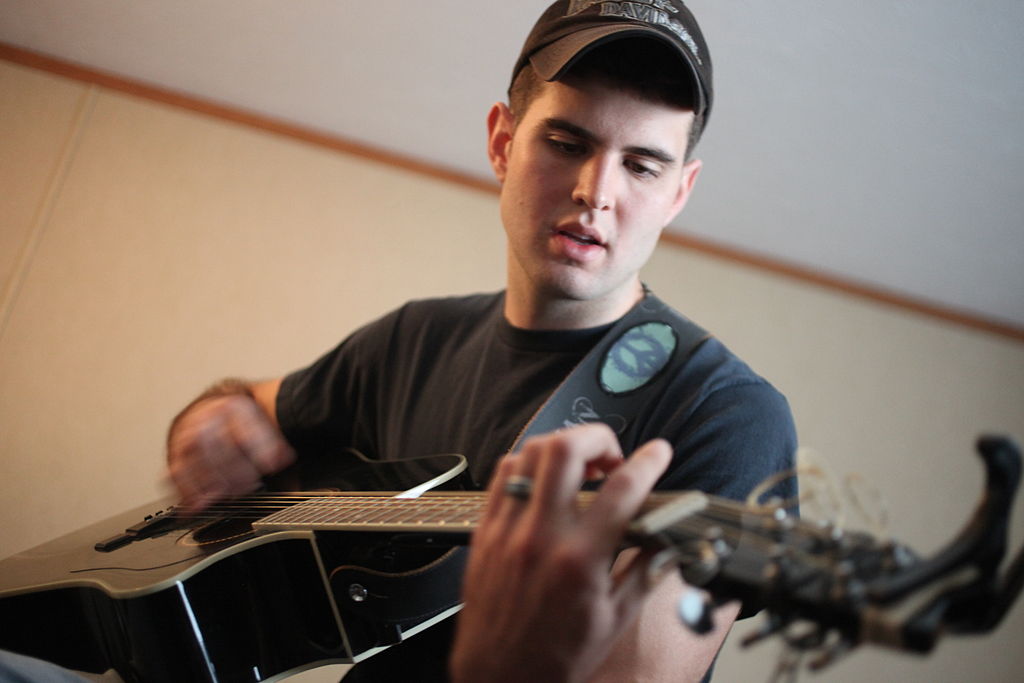
You could define “practicing” in terms of doing something frequently or habitually, true, but one someone describes themselves as a “practicing Catholic” without knowing it, they are professing sound deeply profound. I play the guitar and I have played the guitar since I was 12 going on 13 years old, and while the practice has slowed down these days, for years and years I practiced playing the guitar. Why did I practice? Because I wanted to get better.

When a Catholic says they’re a “practicing Catholic” what they really say is that they’re trying to become more like Christ; to be a better Catholic-Christian. Being a “practicing Catholic” means putting your faith into action. When the priest says to the congregation at the end of Mass, “Go forth, the Mass has ended”, “Go and proclaim the Gospel of the Lord” or “Go in peace, glorifying the Lord by your life” he is indeed exhorting you to go out and be a practicing Catholic; to put your faith into action. We are not called to be Catholic-Christians once every week on the Lord’s day, but every day and in every moment in our lives.

We know that “faith without works is dead faith” (James 2:26), so in order for our faith to grow, as exercise strengthens muscles and improves our fitness, faith must be put into action and we must allow ourselves to be led by God’s grace. Christ himself tell us “You, therefore, must be perfect, as your heavenly Father is perfect” (Matthew 5:48) and becoming more Christ-like and Christ to other requires practice. And this we all know, practice makes perfect.

Amen.

Monday, July 12, 2010

THE INSTITUTION OF THE MASS

Many non-Catholics do not understand the Mass. Television evangelist Jimmy Swaggart wrote, "The Roman Catholic Church teaches that the Holy Mass is an expiatory sacrifice, in which the Son of God is actually sacrificed anew on the cross" (Swaggart, Catholicism and Christianity).

The late Loraine Boettner, the dean of anti-Catholic Fundamentalists, said the Mass is a "jumble of medieval superstition."

Fundamentalists insist that when Christ says, "This is my body," he is speaking figuratively. But this interpretation is precluded by Paul’s discussion of the Eucharist in 1 Corinthians 11:23–29 and by the whole tenor of John 6, the chapter where the Eucharist is promised. The Greek word for "body" in John 6:54 is sarx, which means physical flesh, and the word for "eats" (trogon) translates as "gnawing" or "chewing." This is certainly not the language of metaphor.

No "figurative presence"

The literal meaning can’t be avoided except through violence to the text—and through the rejection of the universal understanding of the early Christian centuries. The writings of Paul and John reflect belief in the Real Presence.

There is no basis for forcing anything else out of the lines, and no writer tried to do so until the early Middle Ages. Christ did not institute a Figurative Presence.

Some Fundamentalists say the word "is" is used because Aramaic, the language Christ spoke, had no word for "represents." Those who make this feeble claim are behind the times, since, as Cardinal Nicholas Wiseman showed a century ago, Aramaic has about three dozen words that can mean "represents."

The Catholic position

The Church teaches that the Mass is the re-presentation of the sacrifice of Calvary, which also is invariably misunderstood by anti-Catholics. The Catholic Church does not teach that the Mass is a re-crucifixion of Christ, who does not suffer and die again in the Mass.
Loraine Boettner mounts another charge. In chapter eight of Roman Catholicism, when arguing that the meal instituted by Christ was strictly symbolic, he gives a cleverly incomplete quotation. He writes, "Paul too says that the bread remains bread: ‘Wherefore whosoever shall eat the bread and drink the cup of the Lord in an unworthy manner. . . . But let each man prove himself, and so let him eat of the bread, and drink of the cup’ (1 Cor. 11:27–28)."

The part of verse 27 represented by the ellipsis is crucial. It reads, "shall be guilty of the body and blood of the Lord." Why does Boettner omit this? Because to be guilty of someone’s body and blood is to commit a crime against his body and blood, not just against symbols of them. The omitted words clearly imply the bread and wine become Christ himself.

Profaning the Eucharist was so serious that the stakes could be life and death. In the next two verses (29–30), Paul states, "For any one who eats and drinks without discerning the body eats and drinks judgment upon himself. That is why many of you are weak and ill, and some have died."

Boettner’s omitted statements reveal that when Paul uses the term "bread," he’s using the language of appearances, what scholars call "phenomenological language."

In this form of speech, something is described according to how it appears, rather than according to its fundamental nature. "The sun rose," is an example of phenomenological language. From our perspective, it appears that the sun rises, though we know that what we see is actually caused by the earth’s rotation.

Scripture uses phenomenological language regularly—as, for example, when it describes angels appearing in human guise as "men" (Gen. 19:1-11; Luke 24:4–7, 23; Acts 1:10–11). Since the Eucharist still appears as bread and wine, Catholics from Paul’s time on have referred to the consecrated elements using phenomenological language, while recognizing that this is only description according to appearances and that it is actually Jesus who is present.

We are not merely symbolically commemorating Jesus in the Eucharist, but actually participating in his body and blood, as Paul states, "The cup of blessing which we bless, is it not a participation in the blood of Christ? The bread which we break, is it not a participation in the body of Christ?" (1 Cor. 10:16).

MORE