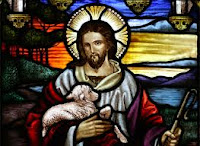
Bread of Life

BREAD OF LIFE
 this is the bread that comes down from heaven so that one may eat it and not die. (john 6: 50)
The miracle of God’s physical presence to us at every Mass is the truest testament to Christ’s love for us and His desire for each of us to have a personal relationship with Him. Jesus Christ celebrated the first Mass with His disciples at the Last Supper, the night before He died. He commanded His disciples, “Do this in remembrance of me” (Luke 22:19). The celebration of the Mass then became the main form of worship in the early Church, as a reenactment of the Last Supper, as Christ had commanded. Each and every Mass since commemorates Jesus’ sacrifice on the cross through the Holy Eucharist. Because the Mass “re-presents” (makes present) the sacrifice on Calvary, Catholics all around the world join together to be made present in Christ’s timeless sacrifice for our sins. There is something fascinating about continuing to celebrate the same Mass—instituted by Christ and practiced by the early Church—with the whole community of Catholics around the world…and in heaven.

THE REAL PRESENCE

Why does the Catholic Church believe Christ is really present in the Eucharist?
The Catholic doctrine of the Real Presence is the belief that Jesus Christ is literally, not symbolically, present in the Holy Eucharist—body, blood, soul and divinity. Catholics believe in the Real Presence of Christ in the Eucharist because Jesus tells us this is true in the Bible:

“I am the bread of life. Your fathers ate the manna in the wilderness, and they died. This is the bread which comes down from heaven, that a man may eat of it and not die. I am the living bread which came down from heaven; if any one eats of this bread, he will live for ever; and the bread which I shall give for the life of the world is my flesh." The Jews then disputed among themselves, saying, ‘How can this man give us his flesh to eat?’ So Jesus said to them,

"Truly, truly, I say to you, unless you eat the flesh of the Son of man and drink his blood, you have no life in you; he who eats my flesh and drinks my blood has eternal life, and I will raise him up at the last day. For my flesh is food indeed, and my blood is drink indeed. He who eats my flesh and drinks my blood abides in me, and I in him” - John 6:48-56
Furthermore, the early Church Fathers either imply or directly state that the bread and wine offered in the celebration of the Lord’s Supper is really the body and blood of Jesus Christ. In other words, the doctrine of the Real Presence that Catholics believe today was believed by the earliest Christians 2,000 years ago!

This miracle of God’s physical presence to us at every Mass is the truest testament to Christ’s love for us and His desire for each of us to have a personal relationship with Him.

Showing posts with label St Thomas Aquinas. Show all posts

Thursday, February 2, 2017

IMMIGRATION

What Does Saint Thomas Say About Immigration?

By John Horvat II

What Does Saint Thomas Say About Immigration?In looking at the debate over immigration, it is almost automatically assumed that the Church’s position is one of unconditional charity toward those who enter the nation, legally or illegally.

However, is this the case? What does the Bible say about immigration? What do Church doctors and theologians say? Above all, what does the greatest of doctors, Saint Thomas Aquinas, say about immigration? Does his opinion offer some insights to the burning issues now shaking the nation and blurring the national borders?

Immigration is a modern problem and so some might think that the medieval Saint Thomas would have no opinion about the problem. And yet, he does. One has only to look in his masterpiece, the Summa Theologica, in the first part of the second part, question 105, article 3 (I-II, Q. 105, Art. 3). There one finds his analysis based on biblical insights that can add to the national debate. They are entirely applicable to the present.

Saint Thomas:

“Man’s relations with foreigners are twofold: peaceful, and hostile: and in directing both kinds of relation the Law contained suitable precepts.”

Commentary:

In making this affirmation, Saint Thomas affirms that not all immigrants are equal. Every nation has the right to decide which immigrants are beneficial, that is, “peaceful,” to the common good. As a matter of self-defense, the State can reject those criminal elements, traitors, enemies and others who it deems harmful or “hostile” to its citizens.

The second thing he affirms is that the manner of dealing with immigration is determined by law in the cases of both beneficial and “hostile” immigration. The State has the right and duty to apply its law.

Saint Thomas:

“For the Jews were offered three opportunities of peaceful relations with foreigners. First, when foreigners passed through their land as travelers. Secondly, when they came to dwell in their land as newcomers.

And in both these respects the Law made kind provision in its precepts: for it is written (Exodus 22:21): ’Thou shalt not molest a stranger [advenam]’; and again (Exodus 22:9): ’Thou shalt not molest a stranger [peregrino].’”

Commentary:

Here Saint Thomas acknowledges the fact that others will want to come to visit or even stay in the land for some time. Such foreigners deserved to be treated with charity, respect and courtesy, which is due to any human of good will. In these cases, the law can and should protect foreigners from being badly treated or molested.

Saint Thomas:

“Thirdly, when any foreigners wished to be admitted entirely to their fellowship and mode of worship. With regard to these a certain order was observed. For they were not at once admitted to citizenship: just as it was law with some nations that no one was deemed a citizen except after two or three generations, as the Philosopher says (Polit. iii, 1).”

Commentary:

Saint Thomas recognizes that there will be those who will want to stay and become citizens of the lands they visit. However, he sets as the first condition for acceptance a desire to integrate fully into what would today be considered the culture and life of the nation.

A second condition is that the granting of citizenship would not be immediate. The integration process takes time. People need to adapt themselves to the nation.

He quotes the philosopher Aristotle as saying this process was once deemed to take two or three generations.

Saint Thomas himself does not give a time frame for this integration, but he does admit that it can take a long time.

Saint Thomas:

“The reason for this was that if foreigners were allowed to meddle with the affairs of a nation as soon as they settled down in its midst, many dangers might occur, since the foreigners not yet having the common good firmly at heart might attempt something hurtful to the people.”

Commentary:

The common sense of Saint Thomas is certainly not politically correct but it is logical. The theologian notes that living in a nation is a complex thing. It takes time to know the issues affecting the nation.

Those familiar with the long history of their nation are in the best position to make the long-term decisions about its future.

It is harmful and unjust to put the future of a place in the hands of those recently arrived, who, although through no fault of their own, have little idea of what is happening or has happened in the nation. Such a policy could lead to the destruction of the nation.

As an illustration of this point, Saint Thomas later notes that the Jewish people did not treat all nations equally since those nations closer to them were more quickly integrated into the population than those who were not as close.

Some hostile peoples were not to be admitted at all into full fellowship due to their enmity toward the Jewish people.

Saint Thomas:

“Nevertheless it was possible by dispensation for a man to be admitted to citizenship on account of some act of virtue: thus it is related (Judith 14:6) that Achior, the captain of the children of Ammon, ‘was joined to the people of Israel, with all the succession of his kindred.’”

Commentary:

That is to say, the rules were not rigid. There were exceptions that were granted based on the circumstances. However, such exceptions were not arbitrary but always had in mind the common good.

The example of Achior describes the citizenship bestowed upon the captain and his children for the good services rendered to the nation.

* * * * * * * * * * * * * * * * * * * * * * * * * * * * * * * * * * * * * * * * * * * ** * * * * * * *

These are some of the thoughts of Saint Thomas Aquinas on the matter of immigration based on biblical principles. It is clear that immigration must have two things in mind: the first is the nation’s unity; and the second is the common good.

Immigration should have as its goal integration, not disintegration or segregation. The immigrant should not only desire to assume the benefits but the responsibilities of joining into the full fellowship of the nation.

By becoming a citizen, a person becomes part of a broad family over the long term and not a shareholder in a joint stock company seeking only short-term self-interest. Secondly, Saint Thomas teaches that immigration must have in mind the common good; it cannot destroy or overwhelm a nation.

This explains why so many Americans experience uneasiness caused by massive and disproportional immigration. Such policy artificially introduces a situation that destroys common points of unity and overwhelms the ability of a society to absorb new elements organically into a unified culture. The common good is no longer considered.

A proportional immigration has always been a healthy development in a society since it injects new life and qualities into a social body. But when it loses that proportion and undermines the purpose of the State, it threatens the well-being of the nation.

When this happens, the nation would do well to follow the advice of Saint Thomas Aquinas and biblical principles. The nation must practice justice and charity towards all, including foreigners, but it must above all safeguard the common good and its unity, without which no country can long endure.

Monday, December 21, 2015

CHRIST THE SAVIOR

BASED ON THE WRITINGS OF THE SUMMA OF ST. THOMAS AQUINAS

FOR THE CONFRATERNITY OF THE PRECIOUS BLOOD BY FRS. WALTER FARRELL AND MARTIN HEALY

 C. CHRIST AS OUR SAVIOR AND REDEEMER

6. HIS PASSION AND DEATH

BUT THE GLORY OF CHRIST in His body, and the glory that is to come to all men at the end of the world are purchased with a great price. Before the body of Christ could be confirmed in the glory of His sanctified soul, before men could have any chance to emulate His glory, Christ had to win redemption for mankind by His Passion and His death upon the Cross of Calvary.

CHRIST DID NOT SUFFER and then die upon the Cross because God was under any compulsion to demand so great a recompense for the sins of men. God could have simply condoned men's sins and granted them pardon when they repented of their sins. Nor was Christ Himself under any compulsion to suffer and die for the sins of men.

He offered Himself freely and voluntarily as a sacrifice for men. But Christ suffered for men because this was the will of God. God willed that His only-begotten Son should become man to suffer and die for the salvation of men. This Divine decision manifests both the justice and the mercy of God.

It manifests His justice, because it shows that God has actually demanded satisfaction for the sins of men against Him. It manifests His mercy, because no one but a God-man could have offered a suitable satisfaction for the sins of men. Because He was God, Christ could offer God an infinite satisfaction for the infinite malice of sin. Because He was man, Christ could offer a man's satisfaction for man's sin.

THE WISDOM OF GOD'S PLAN in the Passion and death of Christ is shown, too, by the other purposes which God accomplished in this way. Christ suffered and died to win God's pardon for the sins of men. But His suffering did more than this. In the first place, since He was both God and man, His suffering was a staggering proof of God's love for men.

Could God do more for men than suffer and die for them? Secondly, in His Passion and death Christ gave to men an example of the perfect virtue which will lead men to heaven: obedience to God's will, humility, constancy in following God's will, fortitude in the face of death, a love of justice even unto death, and so on.

Thirdly, by His suffering Christ merited grace and glory for men, and so made it possible for men to attain their real happiness. Fourthly, by suffering and dying for all men, Christ gave to men a strong additional motive for avoiding sin.

If a father sold all his possessions in order to pay the foolish debts of his son, would not the son have a strong reason for behaving prudently in the future? If the Son of God suffered and died because of the sins of men, to pay the debt of men's sins, should not all men have a good reason for avoiding sin in the future? Lastly, the Passion and death of Christ are a Divine tribute to the dignity of man.

Man had destroyed himself by falling victim to the devil in the garden of Paradise. Through Christ, a man conquers the devil and restores mankind to the friendship of God. Men can point to Christ with honest pride and say that their Brother Man has saved them.

IN HIS PASSION AND DEATH Christ endured extreme suffering. He suffered at the hands of both men and women. A man betrayed Him; a woman betrayed His Apostle Peter; the Sanhedrin condemned Him; His own people cried out for His blood; Herod and Pilate washed their hands of Him; Pilate delivered Him over to scourging and the crucifixion on the Cross; the soldiers and servants mocked Him and spat upon Him and beat Him; He was abandoned by His Apostles and friends; His reputation was destroyed by the ignominy of His trial and death as a criminal; His soul was sad and weary at the prospect and the reality of suffering and death; His sensitive nature flinched from suffering and death; His hands and feet were pierced by nails; His brow was crowned with thorns; His whole body was torn with the lashes of the scourging. And because He had a perfect human nature He felt this suffering all the more keenly.
IT IS TRUE that the higher part of His soul continued to enjoy the vision of God. But the lower part of His soul, His power to feel sensitive joy or pain, was inundated with the anguish of His torments. Christ allowed His human nature to experience the length and the breadth and the depth of human suffering. Because He suffered to atone for the sins of all men, He allowed Himself to endure the fullness of human pain.

In Him the words of the prophet Isaias were fulfilled: "There is no beauty in him, nor comeliness: and we have seen him, and there was no sightliness, that we should be desirous of him: despised and the most abject of men, a man of sorrows and acquainted with infirmity: and his look was as it were hidden and despised. Whereupon we esteemed him not.

Surely he hath borne our infirmities and carried our sorrows: and we have thought him as it were a leper, and as one struck by God and afflicted. But He was wounded for our iniquities: he was bruised for our sins. The chastisement of our peace was upon him: and by his bruises we are healed" (Isaias LIII, 2-5).

THE SUBLIMITY OF CHRIST'S LOVE for men is shown by the fact that He did not have to suffer and die. Because He was God, He could have prevented His enemies from doing Him any injury. Because His soul had perfect control of His body, He could have prevented the wounds from achieving their normal effect. But, in obedience to the will of His Father, He submitted Himself to the violent hands of His enemies.

God and Christ Himself, out of love for men, delivered Christ to the hands of His torturers and executioners. But it was these latter who scourged Christ, crowned Him with thorns, nailed Him to the Cross and so killed Him.

His own people handed Him over to the Romans to be put to death, and the Romans crucified Him. In this way Christ suffered both from the Jews and from the pagans of the world. Since He came to save not only the Jews but also the rest of men, it was natural that He should suffer at the hands of both.

THE GUILT OF THOSE who brought about the death of Christ varies with their knowledge of what they were doing. Least guilty of all were the pagan soldiers who tortured and crucified Christ. They had no knowledge of the fact that Christ was the Savior of mankind, nor the fact that Christ was God, the Son of God. More guilty than they was Pilate who, though he also was ignorant of the true identity of Christ, nevertheless, out of cowardice, condemned an innocent man to death.

Next in the mounting scale of guilt comes the multitude of simple people at Jerusalem who were misled by their leaders. They had seen the wonderful works of Christ and so might have believed in Him. But their leaders deceived them and made them doubt Christ.

Most guilty of all were the arch conspirators among the leaders of the people. They knew that Christ had fulfilled in His Person and life the signs foretold by the prophets. But they were unwilling to accept Christ as their Savior.

They deliberately blinded their eyes to the evident signs of His Divinity. God was ready to give them faith in Christ, but, in the hardness of their hearts, they refused to accept it. Because their ignorance of His true identity was deliberate, it does not excuse their sin. They committed the most grievous of sins. They delivered their Savior and their God to death at the hands of pagans.

CHRIST SUFFERED AND DIED on the Cross of Calvary. As He hung there, suspended between earth and sky, with His life's blood draining away in agony, His enemies mocked Him. "If thou be the son of God," they said, "come down from the Cross". As St. Paul has said, the crucified Christ is "unto the Jews indeed a stumbling-block, and unto the Gentiles foolishness" (1 Cor. I, 23).

Did God fail on the Cross? Was His life among men a magnificent but futile gesture? St. Paul gives us the answer: "But unto them that are called, both Jews and Greeks," the crucified Christ is "the power of God, and the wisdom of God. For the foolishness of God is wiser than men (1 Cor. I, 24-25). On the Cross Christ seems most helpless. But it is on the Cross that he accomplished His purpose, the salvation of men.

AS CHRIST HUNG ON THE CROSS, He willingly offered His human life and the sufferings and death of His body for the salvation of men. In the plan of God, Christ was the new Adam, the new Head of the human race. Because He offered His life willingly out of charity and obedience to His Father, His human will merited from God the salvation of mankind.

Because He suffered and died out of love and obedience, Christ gave God more than was required to compensate for the sins of the whole human race. He satisfied or atoned for men's sins. He offered His life to God to honor God and to appease Him for the sins of men.

His Passion, therefore, was a sacrifice most pleasing to God. The life which He so willingly laid down for men was the price paid to God for the sins of men and the punishment due to those sins. By paying the price of men's sins Christ redeemed all men.

Christ did all this ----- He merited salvation, He atoned for sin, He sacrificed Himself to God for sin, He redeemed men ----- in obedience to the will of God. His human nature was the instrument of His Godhead, the instrument which the Son of God used to save men. Because it was the instrument of His Godhead, Christ accomplished what He had come into this world to do.

BECAUSE CHRIST IS GOD as well as man, His Passion delivered men from sin and from the power of the devil. It freed men from the penalty of sin, death and the loss of the vision of God. His Passion reconciled men to God and reopened the gates of Heaven to all mankind. His Passion merited for Himself the exaltation of His own human nature. Because He was put to death unjustly, God raised Him from the dead.

Because His body had suffered the humiliation of burial, He ascended into Heaven. Because He had endured the mockery of men, He now sits at the right hand of the Father in Heaven. Because He had been delivered over to the power of men, He has been made the judge of all men in the world to come. In the Passion of Christ the weakness of God is stronger than men. Through the human death of Christ the Divine life is restored to men.

CHRIST REALLY DIED on the Cross. His human soul was separated from His body. But His Divine Personality remained united to both His body and His soul. For this reason the dead body of Christ was still infinitely precious.

Because it was still united to the Person of the Son of God, any indignity inflicted upon it by the soldiers who lowered it from the Cross, any gesture of reverence paid to it by His Mother or the holy men and women who reverently buried it, was of infinite value for the salvation of men.

AS SOON AS HE DIED, the soul of Christ descended into Hell. The Hell of which we speak here is Limbo, the place in which the souls of the just were awaiting deliverance. He hastened to Limbo to announce to the just the reopening of the gates of Heaven. Through His Passion, He had made it possible for them to find glory in the vision of God.

He did not descend into the Hell of the devils and the lost human souls. There .was nothing He could do for them. By their own free decision, they had cut themselves off from God forever. Only those united to Himself in faith and charity could obtain the benefits of His Passion.

Thursday, August 7, 2014

THE IMPORTANCE OF MASS AND THE EUCHARIST

St. Thomas Aquinas
(1225-1274)
Hymn:
"Bread of Angels,
made the bread of men;
The Bread of heaven
puts an end to all symbols:
A thing wonderful!
The Lord becomes our food:
poor, a servant, and humble.
We beseech Thee,
Godhead One in Three
That Thou wilt visit us,
as we worship Thee,
lead us through Thy ways,
We who wish to reach the light
in which Thou dwellest. Amen.
"Panis Angelicus by St. Thomas Aquinas

 
The Bible on the Eucharist (Holy Communion):

As Catholics one of the truths that we hold that has been handed down from Jesus and the apostles is that Jesus is really (not just symbolically) present in the Eucharist, also called Holy Communion.

“The Church has always and everywhere held and continues to hold, that the four Gospels are of apostolic origin. For what the Apostles preached, in fulfilment of the commission of Christ, afterwards they themselves and apostolic men, under the inspiration of the divine Spirit, handed onto us in writing: … the fourfold Gospel, according to Matthew, Mark, Luke and John”. “… the four Gospels just named, whose historical character the Church unhesitatingly asserts, faithfully hand on what Jesus Christ, while living among men, really did and taught for their eternal salvation...” (Sections 18 and 19 of Dei Verbum, a Vatican II document.)

Below are some passsages from the New Testament regarding the Eucharist, which we Catholics believe are literally true because this is the understanding that has been handed down to us through the centuries from the apostles as part of the deposit of the faith. Even though they may seem incredible or miraculous, they are not unreasonable, because we also believe that Jesus is God who not only knows all things but is all powerful and can do all things. We believe this because Jesus taught it and our faith is in Jesus. Jesus loves us so much that He wants to be as united to us as possible and this is one way He decided that we could be united to Him not only in spirit but also receive Him literally into bodies.

Scripture Verses on the Eucharist:

Jesus said in John 6:48-65: " 'I am the bread of life. Your ancestors ate the manna in the desert, but they died; this is the bread that comes down from heaven so that one may eat it and not die. I am the living bread that came down from heaven; whoever eats this bread will live forever; and the bread that I will give is my flesh for the life of the world.' The Jews quarreled among themselves, saying, 'How can this man give us (his) flesh to eat?' Jesus said to them, 'Amen, amen, I say to you, unless you eat the flesh of the Son of Man and drink his blood, you do not have life within you. Whoever eats my flesh and drinks my blood has eternal life, and I will raise him on the last day.

For my flesh is true food, and my blood is true drink. Whoever eats my flesh and drinks my blood remains in me and I in him. Just as the living Father sent me and I have life because of the Father, so also the one who feeds on me will have life because of me. This is the bread that came down from heaven. Unlike your ancestors who ate and still died, whoever eats this bread will live forever.' These things he said while teaching in the synagogue in Capernaum. Then many of his disciples who were listening said, 'This saying is hard; who can accept it?'

Since Jesus knew that his disciples were murmuring about this, he said to them,
'Does this shock you? What if you were to see the Son of Man ascending to where he was before? It is the spirit that gives life, while the flesh is of no avail. The words I have spoken to you are spirit and life. But there are some of you who do not believe.'
Jesus knew from the beginning the ones who would not believe and the one who would betray him. And he said, 'For this reason I have told you that no one can come to me unless it is granted him by my Father.' "

Matt. 26:26-28: "Now as they were eating, Jesus took bread, and blessed, and broke it, and gave it to the disciples and said, 'Take, eat; this is my body.' And he took a cup, and when he had given thanks he gave it to them, saying, 'Drink of it, all of you; for this is my blood of the covenant, which is poured out for many for the forgiveness of sins.' "

Mark 14:22-24: " 'And as they were eating, he took bread, and blessed, and broke it, and gave it to them, and said, Take; this is my body. And he took a cup, and when he had given thanks he gave it to them, and they all drank of it. And he said to them, This is my blood of the covenant, which is poured out for many.' "

Luke 22:19-20: "And he took bread, and when he had given thanks he broke it and gave it to them, saying, 'This is my body which is given for you. Do this in remembrance of me.' And likewise the cup after supper, saying, 'This cup which is poured out for you is the new covenant in my blood.' "

1 Cor. 10:16-17: "The cup of blessing which we bless, is it not a participation in the blood of Christ? The bread which we break, is it not a participation in the body of Christ? Because there is one bread, we who are many are one body, for we all partake of the one bread."

1 Cor. 11:23-29: "For I received from the Lord what I also delivered to you, that the Lord Jesus on the night when he was betrayed took bread, and when he had given thanks, he broke it, and said, 'This is my body which is for you. Do this in remembrance of me.' In the same way also the cup, after supper, saying, 'This cup is the new covenant in my blood. Do this, as often as you drink it, in remembrance of me.'

For as often as you eat this bread and drink the cup, you proclaim the Lord's death until he comes. Whoever, therefore, eats the bread or drinks the cup of the Lord in an unworthy manner will be guilty of profaning the body and blood of the Lord. Let a man examine himself, and so eat of the bread and drink of the cup. For any one who eats and drinks without discerning the body eats and drinks judgment upon himself."